

Canadian company exits contentious uranium mining project in Western Alaska
Opponents cautiously celebrate, but the owner of the mining claims is looking for a new partner.
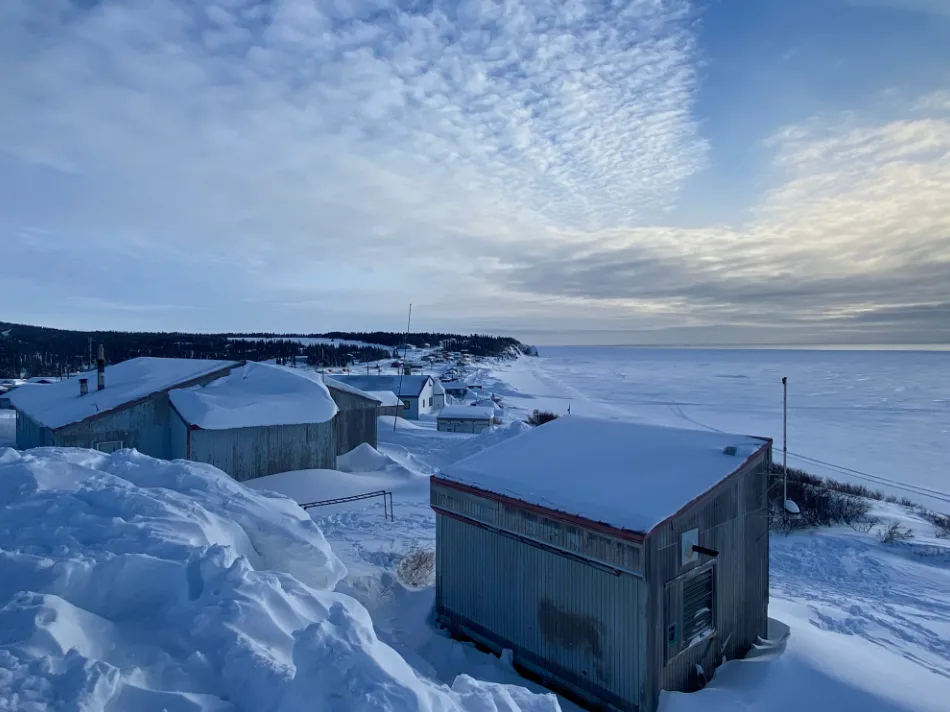
A small Canadian company behind a controversial effort to mine uranium in Western Alaska has pulled out of the project, the firm has announced.
Panther Minerals last year proposed exploratory drilling over the next four years in search of uranium on Alaska’s Seward Peninsula.
But it ultimately decided to abandon the project, called Boulder Creek, based on “seasonal, logistical, and capital considerations,” the company said in a four-paragraph press release dated July 11.
Panther’s proposal had sparked sharp opposition among residents of the Indigenous village of Elim, a community of some 350 Iñupiaq and Yup’ik people that’s perched on the southern coast of the Seward Peninsula. The village is about 30 miles south of the uranium prospect and 90 miles east of Nome.
Elim residents fear that uranium mining could pollute the nearby Tubutulik River, which they depend on for salmon and other fish. The village has a single, tiny grocery store, and many residents subsist largely on wild foods.
Panther had eyed the region as a possible source of uranium to help power a global transition to cleaner energy. Uranium is essential to nuclear power, and, like many other minerals used in low-carbon energy, the United States currently produces very little of it.
The site targeted by Panther — Alaska’s largest known uranium prospect — is far from being a producing mine, and one likely would require years of study before being built.
While the company’s departure all but ensures that no exploratory drilling will be done at Boulder Creek this summer, and casts some uncertainty over the deposit’s potential, it’s still possible that another firm could pick up the project.
The mining claims that Panther had leased are still owned by Dave Hedderly-Smith, a Washington state-based geologist and prospector who has spent decades in Alaska’s mining industry. In an interview last week, he said he still would like to see the prospect developed and is already fielding interest from other companies.
Hedderly-Smith added that he sees Panther’s exit as an opportunity to work with a different company with greater mining expertise and a stronger focus on community outreach.
Mining opponents in Elim celebrated the news, but said they remain wary of new developers entering the picture.
“I really want to say, ‘It’s really good. It’s a win for us,’” said Emily Murray, an Elim resident and vice president of the Norton Bay Watershed Council, a group opposed to uranium mining in the area.
But if another mineral exploration company moves in, “we’re still going to fight,” she added.
Panther’s state permit for mineral exploration could be amended to include a new operator, according to Lorraine Henry, a spokesperson with the state's land management agency, the Department of Natural Resources.
A completely new permit may not be required if the proposed work remains the same, she added.

Northern Journal runs on reader support — voluntary paid memberships make up the majority of our revenue. Join if you can; if you already are a member, thank you.
The Anchorage Press corrects errors publicly and promptly. If you believe this reporting contains an inaccuracy, please contact [email protected].

Max Graham
Journalist covering Alaska politics, land, energy, environment, and community affairs for Northern Journal & Anchorage Press.
JOIN THE PRESS EMAIL LIST
Sign up for the good stuff. Free email dispatches delivered straight to your inbox with zero paywalls.
RELATED DISPATCHES

Fractured GOP field, candidate's improbable rise could clear path for a Democrat in Alaska governor's mansion
It's been more than two decades since Alaska elected a Democratic governor.
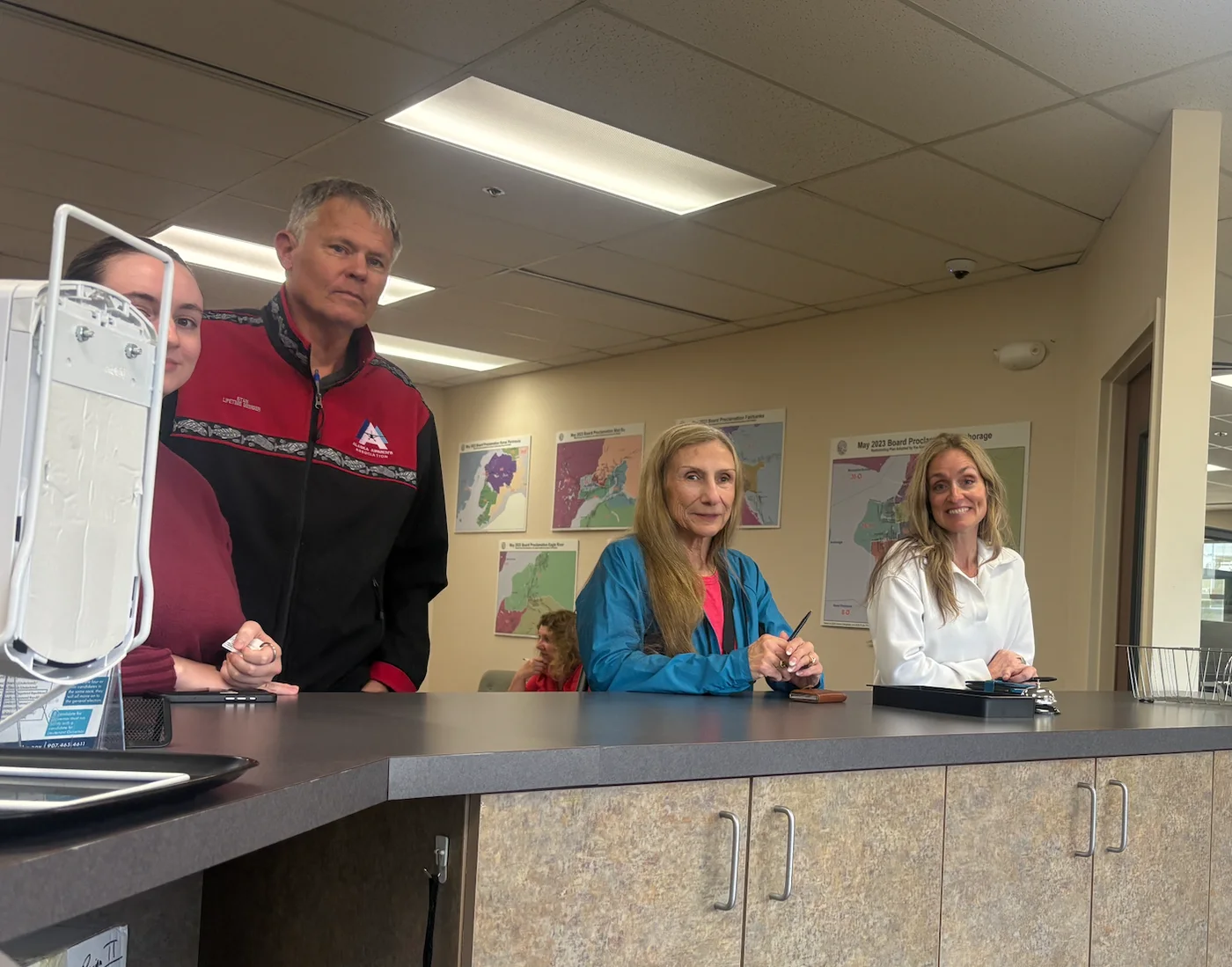
In shakeup, disqualified governor candidate's running mate — and his wife — step up to run
"I'm stepping up to governor," Candi English told employees at the Alaska Division of Elections.
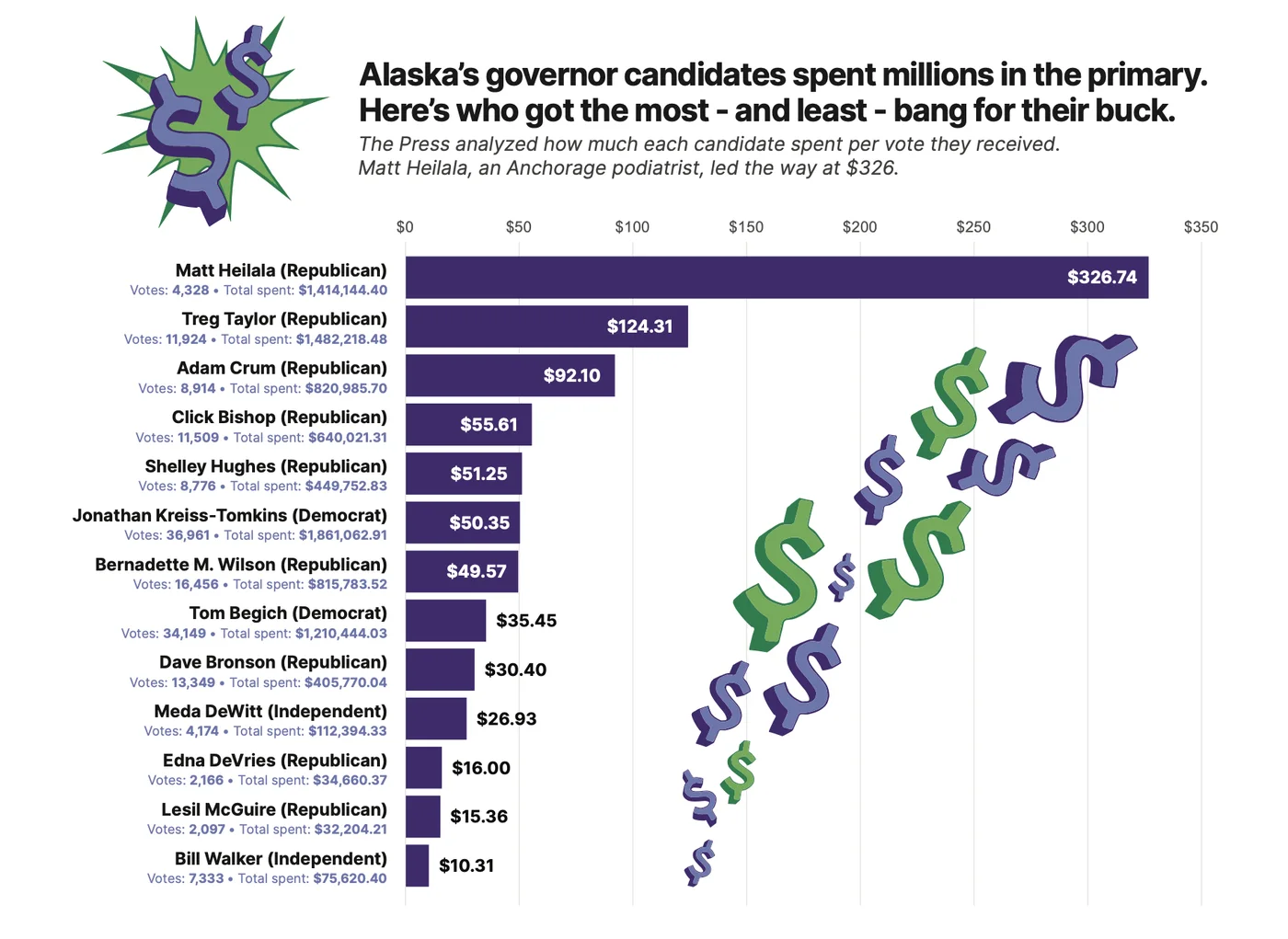
This podiatrist spent $325 per vote in his bid to be Alaska governor. Here's how the other candidates did.
Independent Bill Walker, meanwhile, spent a mere $10 to win each of his 7,333 votes.
Like what you see?
We want you to have nice things. We’re dedicated to reporting on the hard and the fun topics (sometimes both…) – powered by Alaskan readers.